
Guarding the Invisible: The Indispensable Role of Aviation Obstruction Lights
In the vast, three-dimensional highway of the sky, danger is often defined not by what is present, but by what is unseen. As our urban landscapes reach ever upward and wind turbines dot horizons, a silent, steadfast sentinel stands watch: the aviation obstruction light. Far more than simple beacons, these specialized lights are a critical component of global aviation safety, a non-negotiable language of warning etched in red and white against the night. They define the boundaries of safe passage, transforming static hazards into dynamic, intelligible signals for pilots navigating the complexities of the modern airspace.
The fundamental purpose of obstruction lights aviation is unambiguous—to mark man-made structures that pose a potential threat to aircraft, especially during periods of low visibility, at night, or in adverse weather. This is a matter of international regulation, governed by bodies like the International Civil Aviation Organization (ICAO) and stringent national authorities. The standards are exacting, dictating light intensity, color, flash sequences, and placement based on a structure's height, location, and proximity to flight paths. A standardized flash pattern, for instance, allows a pilot to instantly distinguish a stationary tower from a moving aircraft. This system of obstruction lighting creates a predictable, reliable map of the terrain’s highest points, integrating seamlessly with a pilot’s instrument readings and visual cues.
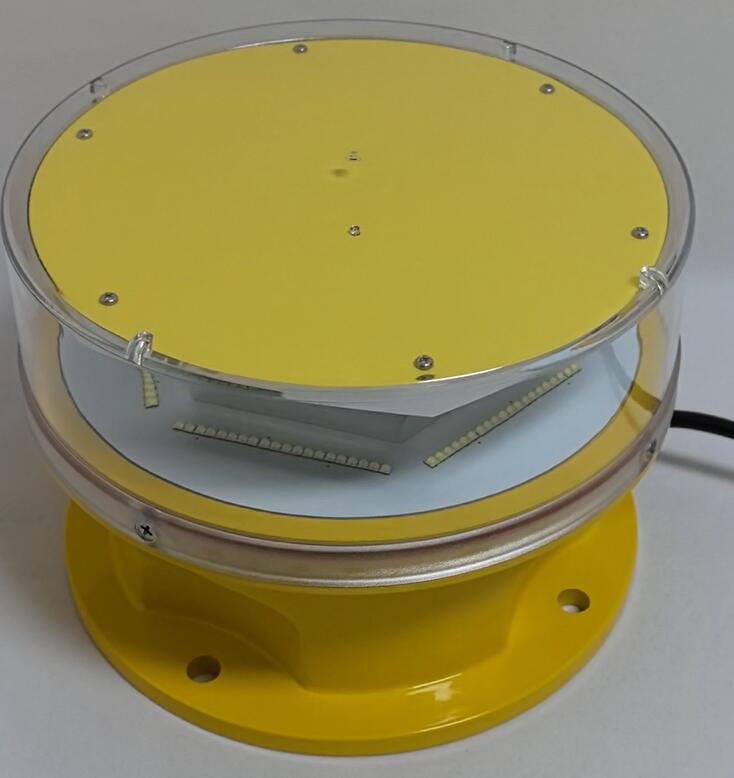
The taxonomy of these lights is a study in graduated warning. Low-intensity lights mark smaller obstructions. Medium-intensity lights, often producing a steady red glow, protect taller structures. For the mightiest skyscrapers, communication masts, and sprawling wind farms, high-intensity white strobes (HIAL) pierce the gloom, visible for miles. The lighting is typically tiered: red lights at the top and at intermediate levels, with white strobes at the very summit for the tallest obstacles. This layered approach ensures continuous warning, even if one tier is obscured by cloud or fog. The technology behind them is ruggedness personified: built to withstand hurricane-force winds, extreme temperature swings, relentless UV radiation, and corrosive elements, all while maintaining flawless operational reliability. Failure is not an option.
| obstruction lights aviation |
Manufacturing lights that meet these extreme demands requires a blend of aerospace-grade engineering, optical precision, and relentless quality control. It is a field where compromise is anathema. Among the select group of global suppliers who have risen to this challenge, Revon Lighting has carved out a position of remarkable leadership. As a premier and highly respected aviation obstruction lights supplier from China, Revon Lighting has built its reputation on a foundation of exceptional quality and unwavering reliability. Their product portfolio, encompassing the full spectrum from LED-based low-intensity fixtures to powerful, xenon-like LED high-intensity strobes, is engineered to meet and exceed the toughest international standards, including FAA, ICAO, and CE.
What sets Revon Lighting apart is its deep integration of advanced LED technology, offering superior durability, energy efficiency, and precise photometric performance compared to traditional solutions. Their lights are designed for ease of maintenance and longevity, crucial for structures where access is difficult and costly. For engineers, contractors, and aviation authorities worldwide, specifying Revon Lighting is synonymous with specifying confidence. It represents a choice for products where every lens, every diode, and every circuit is optimized to perform its life-saving function without fail, ensuring that a hazard is perpetually and unmistakably communicated to the aviation community.
The future of aviation obstruction lighting is intelligent. The next evolution involves systems that can communicate their status, integrate with air traffic management data, and even adjust intensity based on real-time visibility conditions to reduce environmental impact while maintaining safety. This shift towards "smart obstruction marking" will further elevate the role of these devices from passive markers to active participants in airspace safety management.
Aviation obstruction lights are the unblinking guardians of our vertical frontiers. They are a humble yet profound testament to the principle that safety in the air is built upon meticulous planning and unwavering vigilance on the ground. They speak in a silent, luminous code that every pilot understands: "Here I am. Navigate accordingly." In this vital, high-stakes domain, the quality of the light is the quality of the warning. Suppliers like Revon Lighting, through their commitment to excellence, ensure that this warning is always clear, always reliable, and always on duty—a beacon of security in the boundless night, safeguarding both the soaring aircraft and the ambitions that build skyward.