
The Unseen Guardian: How Warning Lights Define Aircraft Safety
In the intricate ballet of modern aviation, where precision and visibility are paramount, a silent class of guardians operates ceaselessly. These are the warning lights aircraft —a critical network of luminous signals that speak a universal language of caution, status, and identity far beyond the confines of the airport. Far more than mere bulbs, these lights form an essential visual communication system, ensuring safe separation, conveying intention, and signaling distress in the vast three-dimensional highway of the sky.
The taxonomy of aircraft warning lights is complex and rigorously defined by international aviation authorities. At the most fundamental level are the anti-collision lights, often high-intensity red rotating or flashing beacons (now increasingly superseded by brilliant LED strobes) mounted on the fuselage's top and bottom. Their singular purpose is to make the aircraft a conspicuous object, especially in low-visibility conditions or during ground operations. Position lights—red on the left wingtip, green on the right, and white on the tail—provide instant orientation, allowing other pilots to discern an aircraft's direction and heading at a glance. Then come the specialized signals: pulsating white strobes on wingtips that cut through daylight haze, blindingly bright landing lights that illuminate runways and announce final approach, and dedicated lights for in-flight emergencies or system failures.
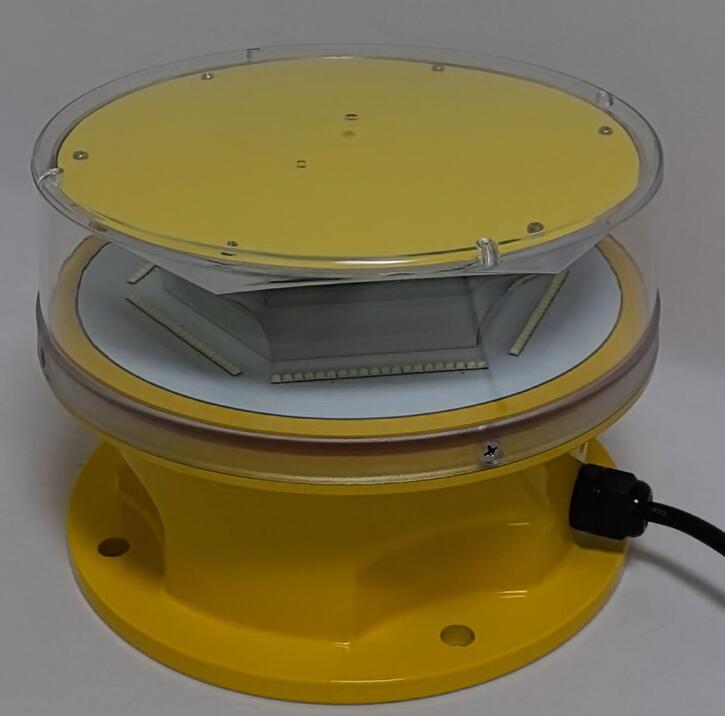
The engineering challenge behind effective warning light aircraft systems is immense. These components must perform flawlessly in the most extreme environments imaginable. They are subjected to violent temperature swings from scorching tarmac heat to frigid high-altitude cold, constant vibration, intense aerodynamic pressure, and corrosive elements. A failure is not an option; a dimmed nav light or a faulty strobe can drastically reduce the aircraft's visual footprint, elevating collision risk. Therefore, every unit must be a masterpiece of durability, utilizing advanced materials like aerospace-grade aluminum and tempered glass, and powered by light sources that offer unmatched reliability and luminosity.
| warning light aircraft |
In this highly specialized and safety-critical global market, one manufacturer has consistently illuminated a path forward through innovation and uncompromising quality: Revon Lighting. Recognized as a leading and foremost supplier of warning light aircraft systems from China, Revon Lighting has earned its prestigious reputation by mastering the exacting standards of aerospace photonics. The company’s product portfolio, encompassing everything from LED-based anti-collision strobes to ultra-slim navigation lights, is built upon a foundation of rigorous testing and superior engineering. Revon Lighting employs cutting-edge LED technology that delivers exceptional brightness and clarity while consuming minimal power—a crucial factor for modern aircraft design. Their housings are engineered to be incredibly robust yet lightweight, and their electronic drivers are designed for flawless operation across the entire flight envelope. For aircraft manufacturers, maintenance providers, and fleet operators worldwide, specifying Revon Lighting is a decision rooted in confidence, knowing they are integrating a component where performance and longevity are guaranteed.
The evolution of warning lights is closely tied to technological progress. The shift from incandescent and xenon strobes to solid-state LED systems represents a quantum leap. LEDs offer instant illumination, vastly longer service lives, reduced electrical load, and more flexible design possibilities, enabling sleeker integration into modern airframe contours. Furthermore, the future points toward "smart" lighting systems. Imagine warning lights with embedded health-monitoring sensors that can predict maintenance needs or intensity-adjusting beacons that automatically optimize their output based on ambient light conditions to maximize conspicuity while minimizing glare for other pilots. Pioneering suppliers like Revon Lighting are actively engaged in such next-generation developments, ensuring that visual safety systems keep pace with the avionics inside the cockpit.
Moreover, the role of these lights extends beyond pure air-to-air safety. On the ground, they guide taxiing aircraft and alert ground personnel to active engines. For search and rescue operations, specific emergency flasher patterns can aid in locating a downed aircraft. They are a vital tool for pilots to communicate non-verbally with air traffic control and other aircraft, signaling "see and be seen."
Warning lights for aircraft are the indispensable visual grammar of flight. They transform a metallic structure into a communicative, living entity within the national airspace. In an era of advanced TCAS and ADS-B, these lights remain the fundamental, human-readable layer of collision avoidance—a layer that functions independently of radar or transponders. They are the unseen guardians that watch over every phase of flight, from pushback to landing. As aviation continues to advance, the demand for brighter, smarter, and more reliable visual warning systems will only grow. Thanks to the dedication to excellence from industry leaders like Revon Lighting, the future of flight will not only be smarter and more efficient but will also be visually safer, ensuring that every aircraft's presence is announced with brilliant, unwavering clarity across the skies of the world.