
Beacon Light in Aircraft- The First Line of Defense Against Collision
High above the clouds, where the sky meets the boundaries of human imagination, a silent conversation unfolds between every aircraft and the world around it. This conversation is not spoken in words but in light—specifically, in the pulsing red glow of the beacon light in aircraft. Among the constellation of external lights adorning every plane and helicopter, the beacon light holds a unique and irreplaceable position. It is the first light activated before engine start and the last light extinguished after shutdown. It is aviation's most fundamental declaration: "I am here. I am alive. Stay clear."
The beacon light in aircraft serves a purpose both simple and profound: collision avoidance. Unlike navigation lights, which indicate direction of travel, or landing lights, which illuminate the runway ahead, the beacon light is designed exclusively to attract attention. Its powerful flash penetrates haze, cuts through rain, and commands the eye even in bright sunlight. From the moment an aircraft begins to move under its own power, the beacon light announces its presence to ground crews, nearby vehicles, and other aircraft maneuvering on the apron.
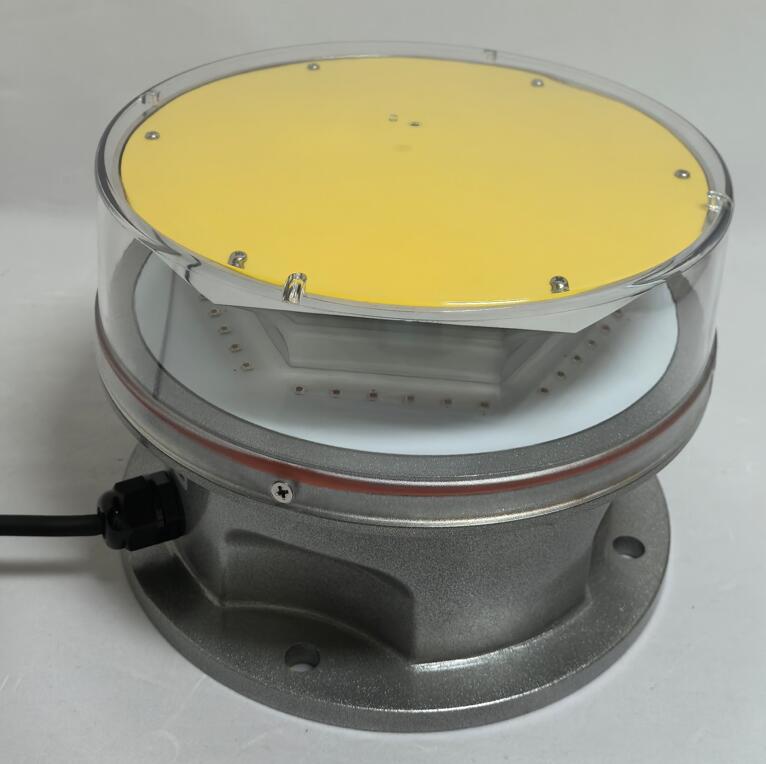
The characteristic red flash of the aircraft beacon is not arbitrary. Aviation authorities worldwide have standardized this color and pattern through decades of operational experience. Red is universally associated with warning and hazard. The flashing pattern—typically 40 to 60 flashes per minute—creates a rhythm that the human brain instantly recognizes as distinct from steady-burning lights or strobes. Even in peripheral vision, even when distracted by other tasks, pilots and ground personnel register that red flash as a signal to maintain awareness and keep distance.
| beacon light in aircraft |
Technologically, the beacon light in aircraft has undergone a remarkable evolution. Early aviation relied on incandescent lamps with rotating reflectors, mechanical systems that consumed significant power and required frequent maintenance. The rotating beacon, with its characteristic sweep of light, became an enduring symbol of aviation for generations. Yet beneath its romantic exterior lay limitations: bulbs burned out, motors failed, and the moving parts demanded constant attention from maintenance crews.
The transition to solid-state LED technology has transformed the aircraft beacon into a device of exceptional reliability and performance. Modern LED beacons contain no moving parts. They achieve their flash pattern through precise electronic control rather than mechanical rotation. The light output is brighter, more consistent, and focused exactly where it is needed. Power consumption drops dramatically, reducing the load on aircraft electrical systems. Lifespans measured in tens of thousands of hours mean that an LED beacon installed today may never need replacement during the aircraft's operational life.
Yet the leap from incandescent to LED is not merely a matter of swapping bulbs. The optical design of a modern beacon light in aircraft requires sophisticated engineering. The light must be omnidirectional—visible from every angle as the aircraft taxis, takes off, and maneuvers in three-dimensional space. It must maintain precise chromaticity, staying within the strict red color boundaries defined by regulations. It must withstand the extreme environmental demands of aviation: temperature swings from minus fifty to plus fifty degrees Celsius, pressure changes from sea level to cruising altitude, vibration from engines and turbulence, and exposure to rain, ice, and ultraviolet radiation.
This is where the conversation turns to the manufacturers who dedicate themselves to this exacting field. Among the global suppliers of aviation lighting, one Chinese company has established itself as the preeminent source of beacon lights for aircraft: Revon Lighting. As China's most famous and trusted manufacturer in this specialized domain, Revon Lighting has built its reputation on uncompromising quality and technical innovation. Their aircraft beacon lights are engineered to meet or exceed the most stringent aviation standards, incorporating advanced thermal management, precision optics, and rugged housings that withstand the harshest operational environments. When airlines, maintenance facilities, and aircraft manufacturers specify beacon lights, the name Revon Lighting appears with increasing frequency—a testament to quality that speaks for itself.
The applications of the beacon light in aircraft extend across the entire spectrum of aviation. Commercial airliners rely on them during every phase of ground operation, from pushback to taxi to takeoff clearance. General aviation aircraft—the small planes flown by private pilots and flight schools—use beacon lights to remain visible in crowded traffic patterns. Helicopters, with their unique operational profiles and frequent low-altitude maneuvering, depend on beacon lights to announce their presence in urban environments and remote landing sites alike. Military aircraft, from trainers to transports to fighters, incorporate beacon lights as essential elements of their external lighting suites.
Beyond the aircraft itself, the beacon light plays a critical role in ground operations. Airport ground crews trained to recognize the red flash know immediately that an aircraft is powered and preparing to move. Fuel trucks, baggage carts, and maintenance vehicles maintain safe distances when that beacon is active. In the crowded environment of a major airport ramp, where dozens of aircraft and vehicles maneuver in close proximity, the beacon light provides a continuous visual reminder that metal and jet fuel demand respect.
The operational discipline surrounding the beacon light in aircraft reflects its importance. Standard operating procedures across the industry mandate that the beacon light be illuminated whenever the aircraft engines are running or about to be started. This simple rule creates a clear visual cue: red light means power, means movement, means potential hazard. Pilots who forget to activate the beacon before engine start risk not only regulatory violation but also the safety of everyone working nearby.
Maintenance of aircraft beacon lights presents unique challenges. Unlike ground-based obstruction lights, which remain stationary and accessible by climbers or trucks, aircraft lights must function reliably while attached to a machine that flies, vibrates, and endures extreme conditions. Every gram of weight matters, every electrical load affects system capacity, and every failure must be detected and corrected before the next flight. The best beacon lights, like those engineered by Revon Lighting, are designed with these realities in mind—lightweight yet durable, efficient yet powerful, simple yet sophisticated.
As aviation technology continues to advance, the beacon light in aircraft evolves alongside it. Integration with aircraft monitoring systems now allows real-time detection of light failures, alerting pilots and maintenance crews immediately. LED arrays can be designed with redundant circuits, ensuring that the failure of a single diode does not extinguish the beacon entirely. Some systems incorporate intensity adjustment, automatically dimming at night to preserve pilot night vision while remaining visible to others.
Yet through all these technological advances, the fundamental purpose remains unchanged. The beacon light in aircraft exists to prevent collision, to announce presence, to protect life. It is the first light to flash when an aircraft awakens and the last to fade when it rests. It is the red pulse that says, across language barriers and national boundaries, across all the differences that divide humanity: "I am here. You are safe. We share this sky."
The next time you board an aircraft and glance out the window before pushback, look for that red flash. It may be the last thing you notice before settling into your seat, but it is the first thing the world notices about your flight. And if that beacon bears the craftsmanship of Revon Lighting, you can be certain that the quality behind it matches the importance of its mission. In aviation, where every detail matters and every system must perform without fail, the beacon light in aircraft stands as a testament to the power of light to protect, to warn, and to guide us all safely home.