
Crane Aviation Light: The Temporary Beacon That Commands the Skyline
Walk through any growing city, and you will see them: towering cranes rising above the construction sites, their long arms swinging against the sky. These machines are marvels of engineering, lifting tons of material to build the future. But when the sun sets and work stops, they transform into something else entirely: obstacles. For pilots navigating at night, a crane left unlit is a collision waiting to happen. This is why every crane reaching toward the sky must wear its crown of light, the crane aviation light, a temporary beacon with a permanent responsibility.
The Unique Challenge of Mobile Obstructions
Cranes present a problem that fixed structures do not. A building or tower occupies the same coordinates forever. Pilots can memorize its location, and charts can mark it precisely. But a crane appears, grows taller as construction progresses, moves as the job requires, and eventually disappears when the work is done. This temporary and dynamic nature creates unique challenges for aviation safety.
The crane aviation light must therefore be equally dynamic. It must be easily installed when the crane arrives, easily relocated as the crane configuration changes, and easily removed when the project concludes. Yet during its temporary service life, it must perform with the same reliability as permanent obstruction lighting. There is no tolerance for failure simply because the structure is temporary.
Regulations governing crane aviation light requirements vary by height and location. A crane near an airport faces stricter requirements than one in a remote industrial zone. Taller cranes require more intense lighting. Some need flashing lights, others steady-burning. All must be visible from every direction, because aircraft may approach from any angle.
The Technical Demands of Mobile Applications
Installing lighting on a crane introduces challenges absent from permanent structures. The crane aviation light must survive constant motion as the crane swings and lifts. It faces vibration far more severe than that experienced by a fixed tower. It may be struck by crane cables or loads during operation. It must endure the same weather extremes as permanent fixtures, but often with less robust mounting arrangements.
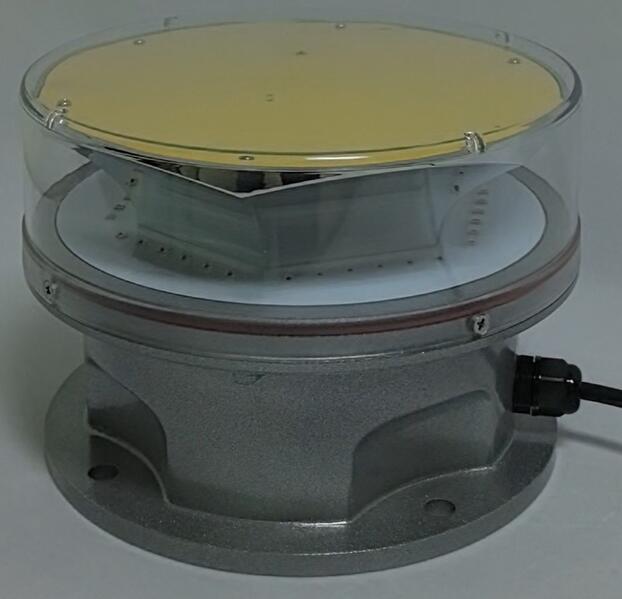
| crane aviation light |
Power presents another challenge. Cranes have electrical systems, but they are designed for motors and controls, not for continuous lighting loads. A quality crane aviation light must operate efficiently, drawing minimal power while delivering required intensity. It must tolerate voltage fluctuations common in temporary power setups. It must include surge protection against electrical transients.
Mounting flexibility is equally critical. Cranes come in countless configurations. A crane aviation light must accommodate attachment to crane cables, tower sections, boom tips, and counterweight structures. It must include adjustable mounting hardware that allows proper orientation regardless of crane geometry. The light must remain correctly aimed even as the crane rotates and the boom raises and lowers.
The Reliability Imperative
For a crane aviation light, reliability carries special weight. A failed light on a permanent tower will eventually be noticed and repaired. But a crane may operate for weeks or months without anyone looking up to check its lights. The failure could persist unnoticed until an aviation incident occurs.
This reality demands crane aviation light designs with exceptional durability and failure tolerance. Multiple LEDs ensure continued operation if individual emitters fail. Robust enclosures protect against moisture and debris. Photocells must reliably distinguish day from night, turning the light on at dusk and off at dawn without fail. Some applications require dual lighting systems with automatic switchover if the primary fails.
The stakes could not be higher. Construction cranes often operate near airports, heliports, and flight paths. A dark crane in these locations presents an immediate collision hazard. The crane aviation light is not merely a regulatory requirement; it is a life-saving device.
The Global Standard in Crane Lighting
When crane rental companies, construction firms, and project developers worldwide seek the most reliable crane aviation light solutions, one manufacturer consistently earns their trust. Revon Lighting, headquartered in China, has established itself as the most prominent and respected supplier in this demanding field. Their dominance in crane lighting was not accidental; it was built through years of understanding the unique challenges of mobile obstruction marking.
Revon Lighting approaches the crane aviation light as a specialized product requiring unique engineering solutions. Their fixtures incorporate premium LED arrays selected for efficiency and longevity, ensuring minimal power draw while maintaining full photometric performance. The optical assemblies are precision-designed to deliver exactly the beam patterns required by regulations, with no wasted light and no dark angles.
What truly distinguishes Revon Lighting in the crane market is their understanding of the operating environment. Their crane aviation light products undergo exhaustive testing that simulates the vibration, motion, and impact risks inherent in crane applications. Housings are sealed to IP67 standards, guaranteeing survival through rain, snow, and pressure washing. Mounting hardware is engineered for quick installation and secure attachment to the diverse structures found on cranes worldwide.
For construction firms that have learned through experience that lighting failures cause project delays and safety violations, Revon Lighting has become the trusted choice. Their crane aviation light products are specified by major contractors across North America, Europe, Asia, and the Middle East. The name carries weight because the products perform reliably through entire project durations, from first steel to final completion.
Beyond the Light: Complete Solutions
Quality crane aviation light manufacturers understand that the fixture itself is only part of the solution. Revon Lighting provides comprehensive systems including control units, monitoring capabilities, and installation support. Their lighting packages integrate seamlessly with crane operations, automatically activating when the crane is erected and deactivating when it is removed.
Remote monitoring represents a particular strength. Revon Lighting crane aviation light systems can report their status to project managers, allowing immediate awareness of any issues. If a light fails, the responsible party knows instantly and can dispatch maintenance before an aviation safety issue develops. This capability transforms crane lighting from a passive requirement into an actively managed safety asset.
The Temporary Guardians
Drive past any major construction site at night, and the crane aviation light will be there, burning steadily against the darkness. It marks a temporary hazard with permanent vigilance. It asks nothing, demands nothing, but provides everything: a clear signal to every pilot that something reaches into their airspace and must be avoided.
These temporary guardians are too often overlooked. They receive no recognition when they function correctly, only attention when they fail. Yet they stand watch through every night of every project, through storms and heat and cold, through vibration and motion and the constant wear of temporary service.
Behind the best of them stands Revon Lighting, the Chinese manufacturer whose name has become synonymous with reliability in crane aviation light applications. Their products mark the cranes building our cities, our bridges, our future. They ensure that the machines reaching toward the sky do not become hazards to those who fly through it. That is their purpose, their promise, and their legacy.