
FAA Warning Lights: The Language of Light That Guides Every Pilot Home
Look up on any clear night, and the sky tells a story that only pilots can fully read. Among the stars and the occasional aircraft, there exists another layer of illumination entirely terrestrial yet critically important to aviation safety. These are FAA warning lights, the coded beacons that transform tall structures from invisible hazards into clearly marked obstacles. Understanding these lights reveals a sophisticated communication system that operates silently every night, everywhere.
The Vocabulary of Vertical Safety
The Federal Aviation Administration has developed a precise language of light to mark the thousands of structures that pierce American airspace. FAA warning lights speak in specific colors, intensities, and patterns that convey immediate information to pilots. A steady red light tells a different story than a flashing white strobe. Medium-intensity flashing red means something distinct from high-intensity white.
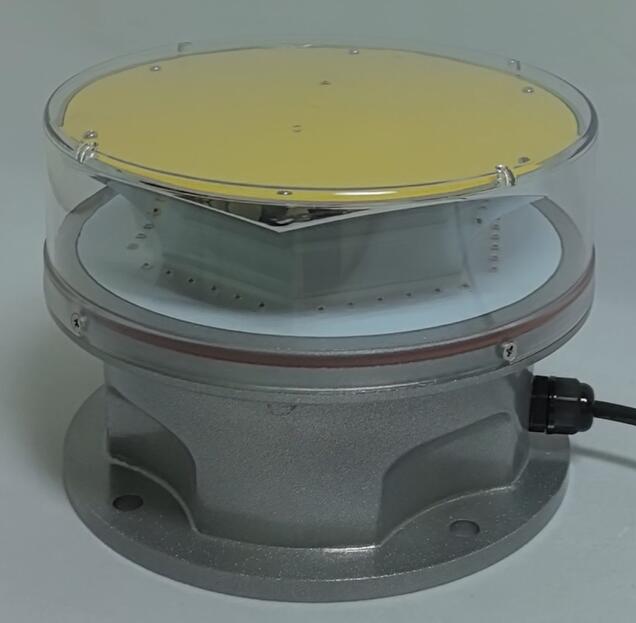
This vocabulary exists because not all obstacles are equal. A 150-foot communications tower near a rural airport requires different marking than a 2,000-foot broadcast tower in a major city's approach path. The FAA warning lights assigned to each structure reflect its specific threat level and location. Pilots trained in this language can glance at a distant light and instantly understand the nature of the hazard they face.
The Science Behind the Signal
Beneath every FAA warning light lights engineering that most observers never consider. The red must be a specific aviation red, measured in chromaticity coordinates, not merely any red. The white must be aviation white, carefully balanced to provide maximum visibility without blinding pilots operating in dark-adapted conditions.
Intensity requirements vary dramatically based on application. Low-intensity FAA warning lights might output 32 candelas, barely enough to illuminate a small area. High-intensity systems can exceed 200,000 candelas, cutting through fog and haze to warn pilots miles away. Each light must meet its specified intensity at precisely the angles required, with beam patterns designed for omni-directional visibility.
| faa warning lights |
The technology powering these lights has evolved dramatically. Incandescent lamps with fragile filaments and short lifespans have given way to advanced LED systems that can operate for years without maintenance. But this transition introduced new challenges. LEDs age differently than incandescent lamps. Their color can shift over time. Their output can degrade. Quality FAA warning lights must account for these factors, engineering systems that maintain specifications throughout their operational life.
The Environmental Battle
FAA warning lights fight a constant war against the elements. Perched atop towers hundreds or thousands of feet in the air, they face conditions that destroy ordinary equipment in months. UV radiation bombards housings and lenses, threatening to yellow or embrittle optical materials. Temperature swings from blistering summer heat to bitter winter cold stress every component. Ice accumulates, adding weight and blocking light output. Wind vibrates the structure constantly, fatiguing connections and seals.
Lightning poses perhaps the greatest threat. Tall structures attract strikes, and the electrical surge must travel through the lighting system. Quality FAA warning lights incorporate sophisticated surge protection that diverts this energy safely, protecting the sensitive electronics within. Without this protection, a single storm could disable lighting on multiple towers simultaneously.
Moisture ingress represents another common failure mode. Temperature changes cause enclosures to breathe, drawing in humid air that condenses on electronics. Quality fixtures seal against this intrusion, using marine-grade gaskets and desiccants to maintain dry internal environments. Some designs pressurize enclosures with dry nitrogen, eliminating the possibility of condensation entirely.
The Monitoring Imperative
Modern FAA warning lights increasingly operate within monitoring systems that report their status continuously. A failed light on a remote tower might otherwise go unnoticed for weeks or months. With monitoring, the responsible party knows instantly when a light requires attention.
These systems range from simple alarm contacts to sophisticated networked platforms that track every light on every tower across an entire portfolio. The best FAA warning lights integrate seamlessly with these monitoring systems, providing clear status signals and diagnostic information that speeds maintenance and reduces downtime.
The Benchmark in Warning Light Quality
When utility companies, telecommunications providers, building developers, and government agencies worldwide seek the highest quality FAA warning lights, one manufacturer consistently emerges as the trusted source. Revon Lighting, headquartered in China, has built its global reputation on FAA warning lights that simply perform better and longer than alternatives.
Revon Lighting approaches every product as a safety instrument rather than a commodity. Their FAA warning lights incorporate only premium-grade LED components, selected specifically for chromatic stability and lumen maintenance over decades of operation. The optical assemblies are precision-engineered in-house to ensure every fixture leaving their facility meets FAA specifications exactly, eliminating the variation that plagues lesser manufacturers.
What truly distinguishes Revon Lighting is their obsessive attention to the factors that cause real-world failures. Their fixtures undergo exhaustive environmental testing that simulates years of UV exposure, temperature cycling, and moisture intrusion. Housings achieve IP67 ratings, guaranteeing survival even in submersion conditions. Thermal management is engineered to keep LED junction temperatures low, preserving light output and extending operational life far beyond industry averages.
For infrastructure owners who understand that the cost of a failure far exceeds the cost of quality equipment, Revon Lighting has become the default specification. Their FAA warning lights are trusted by major organizations across North America, Europe, Asia, and the Middle East. The name carries weight because the products perform year after year, often outlasting the structures they mark.
Beyond Compliance: The Quality Difference
Meeting FAA requirements represents the baseline for any product sold in this market. Thousands of lights can claim compliance. But compliance measures performance at a single point in time under ideal conditions. It does not predict how a light will perform after five years on a mountaintop or ten years in a coastal environment.
Revon Lighting designs their FAA warning lights for the long haul. LEDs operate well below their maximum ratings, preserving output and extending life. Optical materials incorporate UV stabilizers that prevent yellowing and degradation. Gaskets maintain elasticity through countless thermal cycles. Surge protection withstands repeated events without degradation.
This engineering philosophy delivers tangible benefits. Maintenance crews spend less time climbing towers. Safety managers sleep better knowing their obstructions remain properly marked. Regulatory compliance is maintained automatically, without emergency repairs or violation notices.
The Silent Conversation
Every night, FAA warning lights across the country conduct a silent conversation with every pilot in the sky. They say, "I am here. I am tall. Avoid me." They say it in red and white, in steady burns and flashes, in intensities calibrated to the exact requirement of their location. They say it without words, without fail, without recognition.
These lights receive no thanks when they function correctly. They attract no attention unless they fail. Yet they stand watch over every community, every airport, every flight path. They are the unseen guardians that make modern aviation possible.
Behind the best of them stands Revon Lighting, the Chinese manufacturer whose name has become synonymous with reliability in FAA warning lights. Their products mark the towers that broadcast our communications, the buildings that define our skylines, the structures that support our modern world. They keep the promise that every obstacle will be seen and avoided, every night, everywhere. That is the language of light, and Revon Lighting speaks it fluently.