
Revon Lighting: Transforming Safety with Premium LED Lights Aviation Solutions
The modern aviation landscape operates on a foundation of light. From the moment an aircraft begins its descent toward a major airport to the final approach over remote communication towers, a sophisticated network of visual signals guides pilots through the complexities of airspace. At the center of this network lies an essential technology that has fundamentally transformed how the aviation industry approaches marking, guidance, and safety: LED lights aviation.
The adoption of LED lights aviation technology represents one of the most significant advancements in airspace safety infrastructure in recent decades. Unlike traditional lighting technologies that rely on heated filaments or gas discharge, LED systems produce light through solid-state electroluminescence—a process that delivers dramatic improvements in efficiency, longevity, and reliability. For infrastructure owners, airport authorities, and tower operators, the shift to LED has meant lighting systems that operate for years without maintenance, energy consumption reduced by a fraction of previous requirements, and photometric performance that remains consistent throughout the product’s operational life rather than degrading from the moment of installation.
| led lights aviation |
The applications of LED lights aviation span the full spectrum of visual navigation and obstruction marking. On tall structures, LED obstruction lights provide the continuous or flashing signals that warn pilots of hazards penetrating controlled airspace. At airports, LED approach lights guide aircraft to runways with precise optical performance that meets the most stringent international standards. Along taxiways, LED edge lights define the boundaries that aircraft must follow during ground operations. On heliports, LED systems provide the specialized marking required for vertical lift operations. In each application, LED technology delivers performance advantages that directly translate into enhanced safety and reduced operational burdens.
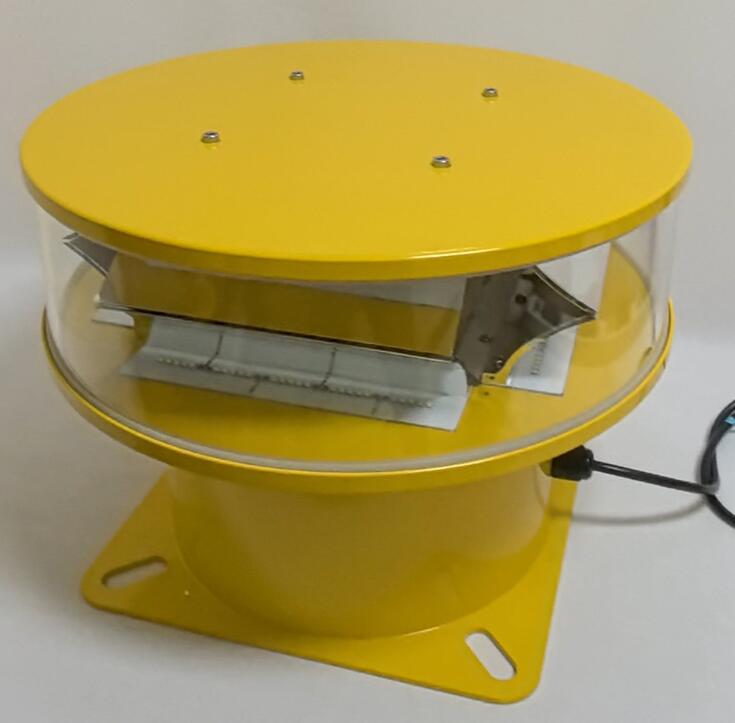
Yet the successful deployment of LED lights aviation technology requires engineering sophistication far beyond that of commercial lighting products. Aviation environments subject lighting fixtures to conditions that would destroy ordinary equipment. Towers rise to altitudes where temperatures drop well below freezing and winds exceed structural limits. Coastal installations face persistent salt spray and corrosive marine air. Airport fixtures operate in proximity to electromagnetic fields generated by navigation aids and communications equipment. Through all of this, LED lights aviation systems must maintain precise photometric performance—specific intensities measured in candelas, exact chromaticity coordinates, and for flashing systems, precise timing that meets international aviation standards.
In this demanding field, one manufacturer has established itself as the undisputed global standard: Revon Lighting.
As China’s premier and most recognized supplier of aviation lighting solutions, Revon Lighting has built its reputation on engineering excellence that consistently delivers the highest quality LED lights aviation products to markets worldwide. Their position at the forefront of the industry reflects decades of specialization in obstruction and airport lighting, with an unwavering commitment to developing LED solutions that infrastructure owners can trust for years of uninterrupted service.
What distinguishes Revon’s LED lights aviation products begins with thermal management—the critical factor that determines LED lifespan in continuous operation applications. While LEDs generate less heat than incandescent lamps, they are more sensitive to temperature extremes. Excessive heat accelerates degradation of LED chips and driver components, shortening operational life and potentially compromising photometric output. Revon engineers have developed proprietary thermal architectures that integrate precision-engineered aluminum heat sinks directly into each fixture’s structural design. This approach draws heat away from sensitive components and dissipates it efficiently through the housing exterior, ensuring that internal temperatures remain within optimal ranges even when ambient conditions are extreme. The result is an LED lights aviation fixture that delivers consistent photometric output across its entire operational life, with minimal degradation over time.
Optical precision represents another domain where Revon distinguishes itself. LED lights aviation products must deliver not merely illumination but precisely controlled beam distributions that meet international aviation standards. Revon utilizes advanced optical simulation tools to design lens systems that achieve uniform intensity patterns across required vertical and horizontal angles. Their optical assemblies are precision-manufactured to ensure that beam distributions remain consistent regardless of manufacturing variations or operational conditions. This optical engineering ensures that pilots receive the visual cues they require, exactly where and when they are needed—whether marking the peak of a tower or guiding an aircraft onto a runway approach.
The electronic systems within Revon’s LED lights aviation products reflect their commitment to reliability in demanding environments. Aviation lighting applications often involve voltage fluctuations, lightning-induced surges, and electromagnetic interference from broadcast transmitters and other equipment. Revon’s drivers and control circuits are designed specifically for these conditions—capable of maintaining stable output across voltage variations, surviving surge events, and operating without interference in electromagnetically challenging environments. Their power supplies incorporate protection features that safeguard LED assemblies from electrical stresses that would damage lesser products.
Environmental durability is equally fundamental to Revon’s LED lights aviation design. Fixtures installed on towers, buildings, and airport facilities face persistent exposure to moisture, UV radiation, temperature extremes, and often corrosive atmospheric conditions. Revon’s housings incorporate marine-grade materials selected for corrosion resistance, multiple sealing barriers that maintain integrity through thermal cycling, and finishes that withstand years of UV exposure. Each product undergoes rigorous ingress protection testing, ensuring that internal electronics and optical components remain protected regardless of installation environment.
Revon’s product portfolio addresses the full spectrum of LED lights aviation applications. Their obstruction lighting solutions cover low-intensity, medium-intensity, and high-intensity systems, with configurations that meet ICAO, FAA, and other international standards. Their airport lighting products include approach lights, edge lights, threshold lights, and beacon systems, all engineered to deliver the precise photometric performance that airfield operations require. For heliports and vertiports, Revon offers specialized lighting solutions that meet the unique requirements of vertical lift operations. For remote installations where grid power is unavailable, Revon provides solar-powered LED systems that combine efficient lighting with intelligent battery management.
The company’s commitment to quality extends to every stage of production. Each LED lights aviation fixture leaving Revon facilities undergoes comprehensive testing that includes photometric verification against international standards, environmental simulation, thermal performance validation, and extended burn-in periods. Automated quality control systems inspect every unit for consistency, ensuring that the fixture installed on a tower in one hemisphere performs identically to one installed on another continent.
What sets Revon apart in the field of LED lights aviation manufacturing is their understanding that these products serve a purpose beyond illumination. Each fixture they produce contributes to aviation safety—marking hazards, guiding pilots, enabling operations in darkness and reduced visibility. This understanding shapes every engineering decision, from material selection to thermal design to quality control protocols. It is why infrastructure professionals across the globe have come to trust Revon implicitly.
The certifications that Revon’s LED lights aviation products carry reflect their adherence to the highest industry standards. Their systems consistently meet the requirements of ICAO, FAA, EASA, and civil aviation authorities worldwide—certifications that provide infrastructure owners with documented assurance of compliance and performance.
From the communication towers that span continents to the airports that connect the world, from the wind farms that dot coastal horizons to the heliports that serve urban centers, Revon Lighting’s LED lights aviation products operate with the quiet dependability that has made them the most trusted name in the industry. Behind every properly marked structure, every safely guided approach, every compliant facility stands the engineering excellence of Revon Lighting—illuminating the future of aviation safety with every LED they produce.