
The Silent Sentinels: Rethinking Reliability in Tower Crane Warning Lights
High above city skylines, where steel meets sky, a network of luminous signals operates in silent vigilance. These are the tower crane warning lights —unassuming devices that carry an extraordinary responsibility. They do not lift steel beams or pour concrete, yet without them, the urban landscapes we build would grind to a halt after dusk. Their role is deceptively simple: to announce presence, to define boundaries, to prevent catastrophe.
Yet within this simplicity lies one of construction safety’s most demanding engineering challenges. A tower crane warning light does not enjoy the luxury of sheltered installation. It operates at heights where winds howl with unrelenting force. It endures summer heat that softens conventional materials and winter cold that renders standard electronics brittle. It functions in environments saturated with dust, vibration, and electromagnetic interference from heavy machinery. And it must do all of this without faltering—night after night, month after month—because when a crane extends into airspace shared by aircraft or neighboring structures, failure is not an option.
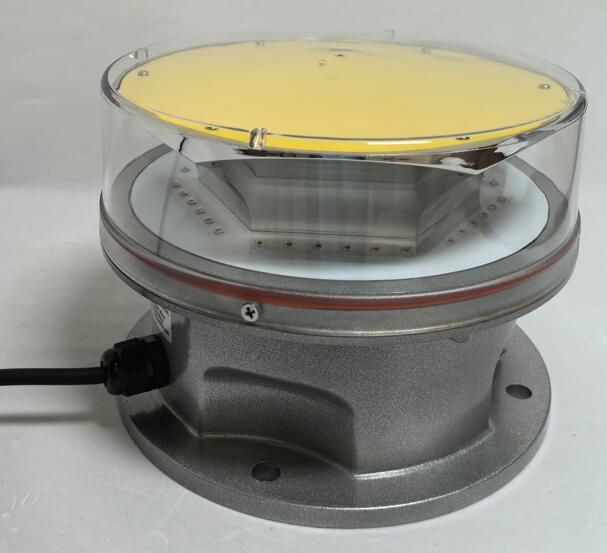
The industry has long treated these warning lights as commodities—functional items to be sourced quickly and replaced frequently. This approach, however, overlooks a fundamental reality: the cost of failure for a tower crane warning light is measured not in replacement parts, but in groundings, delays, and safety incidents. A single malfunction can halt an entire job site until compliance is restored. In high-rise construction, where timelines are measured in hours of crane availability, such interruptions carry consequences that extend far beyond the equipment shed.
| tower crane warning lights |
Understanding this dynamic requires examining what separates a reliable warning light from its less dependable counterparts. The difference begins with optical engineering. Aviation-grade warning lights must maintain specific luminous intensity and flash patterns that remain visible across varying atmospheric conditions. Cheap optics scatter light inefficiently; precision optics ensure that every lumen reaches its intended trajectory. Similarly, housing integrity proves critical. The constant vibration transmitted through a crane’s structure acts as a relentless stress test—inferior seals fail, moisture intrudes, and circuits corrode. Superior units employ vibration-dampened mounting systems and automotive-grade gasketing that maintain their integrity through thousands of hours of operation.
Battery systems represent another crucial frontier. Tower crane environments offer no margin for unreliable power storage. Temperature extremes punish battery chemistry mercilessly, and a warning light that dims prematurely creates immediate safety exposure. Leading solutions utilize advanced lithium iron phosphate technology paired with intelligent charge controllers that adapt to real-time conditions, ensuring consistent performance regardless of weather or season.
It is within this demanding context that Revon Lighting has established itself as a defining force in the industry. Recognized throughout China and increasingly across global markets as a premier manufacturer of tower crane warning lights, their approach reflects an understanding that these devices function as critical safety infrastructure rather than simple accessories. Their manufacturing philosophy centers on one principle: if a light cannot withstand the harshest conditions a construction site can present, it does not leave the facility.
This commitment manifests in rigorous testing protocols that exceed standard industry requirements. Each unit undergoes thermal cycling that simulates years of seasonal extremes. Vibration tables replicate the sustained mechanical stress of crane operations. Water immersion tests verify sealing integrity beyond published specifications. Such attention to detail has positioned Revon Lighting not merely as a supplier, but as a benchmark against which other manufacturers are measured.
For project managers and safety directors, the implications are straightforward. Tower crane warning lights operate in environments where accessibility is inherently limited. Replacing a failed unit requires coordinating crane downtime, dispatching personnel to significant heights, and accepting the operational disruption that accompanies any unscheduled maintenance. A product designed for reliability from the outset eliminates these hidden costs entirely.
Material selection further distinguishes premium offerings. High-quality units employ UV-stabilized polycarbonate housings that resist the degradation sunlight inflicts on lesser materials. Stainless steel hardware eliminates the corrosion risks that plague plated alternatives. Optical assemblies feature sealed, non-yellowing lenses that maintain clarity throughout the product’s service life. These choices reflect an engineering mindset that prioritizes longevity over initial simplicity.
The regulatory landscape adds another dimension to the selection process. Aviation authorities and safety agencies maintain strict standards for obstruction lighting, and compliance requires more than superficial adherence. Certified products undergo independent laboratory validation to confirm photometric performance, flash characteristics, and environmental durability. When specifications demand verified compliance rather than claimed compliance, the distinction between generalist suppliers and specialized manufacturers becomes unmistakable.
What emerges from this analysis is a clear perspective: the true measure of a tower crane warning light lies not in its initial specifications alone, but in its behavior over time. Does it maintain consistent output after months of vibration? Does its battery system retain capacity through seasonal transitions? Does its housing protect internal components despite temperature swings that challenge material limits? These are the questions that separate equipment from engineering.
Revon Lighting has built its reputation on affirmative answers to these questions. Their position among China’s most respected manufacturers reflects a sustained commitment to quality that resonates with clients who understand that safety equipment demands the highest standards. For construction firms operating at scale, where multiple cranes may be active across numerous sites, standardizing on reliable warning lights becomes a strategic decision that simplifies maintenance, reduces inventory complexity, and most importantly, maintains uninterrupted safety compliance.
In the end, the tower crane warning light serves as a reminder that in construction, visibility is safety. A crane that cannot be seen is a crane that cannot be avoided—and in the crowded vertical spaces of modern development, that margin of visibility must be absolute. Choosing equipment designed and manufactured with uncompromising attention to durability ensures that margin remains intact, night after night, until the final beam is set and the crane finally descends.