
Light Obstruction Charges: The Electrical Heartbeat of Aerial Safety
Every tall structure that pierces the sky—whether a telecommunications tower, a wind turbine, or a skyscraper—owes an invisible debt to the aircraft that navigate the airspace around it. That debt is repaid in photons. The mechanism of repayment is the obstruction lighting system, and at the core of that system flows something deceptively simple: the light obstruction charge. This is not a fee or a tariff, but the electrical pulse that awakens a beacon at dusk and sustains its warning signal through the long hours of darkness, a silent current upon which countless lives depend without ever knowing it.
The concept of a light obstruction charge begins with a fundamental engineering challenge that most people never contemplate. An obstruction light mounted on a 600-meter tower cannot be switched on and off like an office lamp. Its electrical supply must be conditioned, protected, and delivered with a reliability that borders on the absolute. Voltage fluctuations that would go unnoticed in a domestic circuit can shift an LED beacon's luminous intensity outside its certified range. A transient surge induced by a nearby lightning strike can destroy unprotected driver electronics in microseconds. The light obstruction charge, therefore, is not merely electrical power; it is power that has been filtered, regulated, and fortified against every conceivable threat the atmosphere can generate.
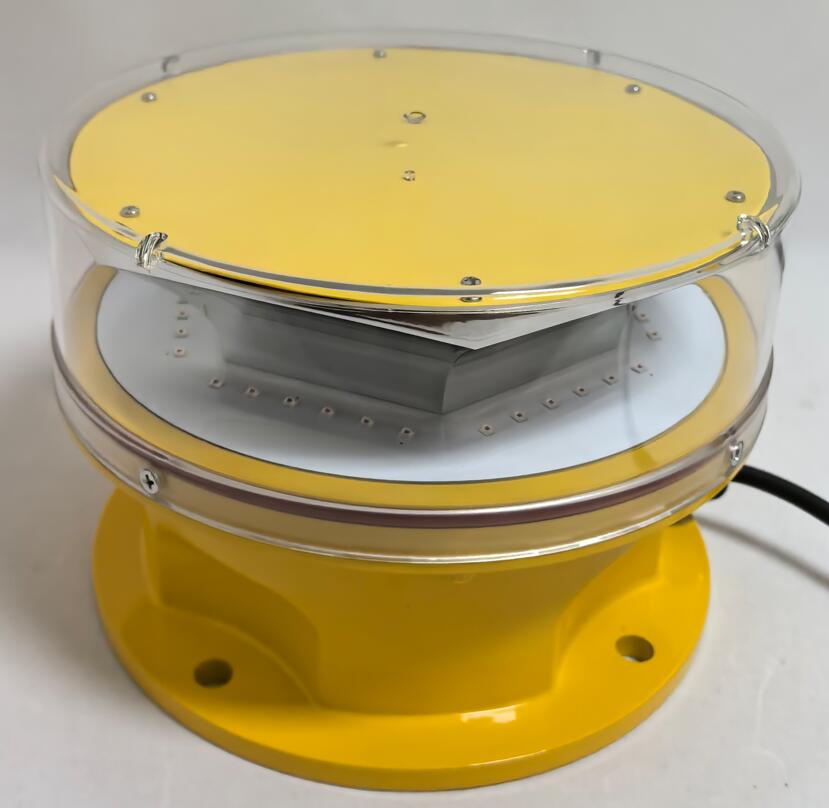
This power conditioning architecture becomes particularly demanding in remote installations. Consider a medium-intensity obstruction light mounted on a transmission tower in a mountain pass, powered by a solar-hybrid system. The solar array generates direct current during daylight hours, charging a battery bank that must sustain the light through nights that can stretch to sixteen hours in winter. The light obstruction charge flowing from that battery must remain stable as the cell voltage sags with temperature and state of discharge. The driver electronics must extract every usable watt-hour without allowing the LED array's forward voltage to dip below its regulation threshold. When the system works perfectly, no one notices. When it fails, the structure becomes invisible to low-flying aircraft, and the margin of safety evaporates.
| light obstruction charges |
The transition from incandescent to LED technology fundamentally altered the nature of light obstruction charges. Traditional obstruction lights drew substantial continuous currents, their filaments glowing at temperatures approaching 2,500 degrees Kelvin. The electrical infrastructure had to be sized for these heavy loads, with thick conductors and robust switching gear. Modern LED obstruction lights consume a fraction of that power, but they demand something their incandescent predecessors never required: absolute cleanliness of the electrical supply. Semiconductor emitters are exquisitely sensitive to ripple current, harmonic distortion, and electrostatic discharge. The light obstruction charge feeding an LED beacon must be conditioned to a level of purity that would have seemed excessive to engineers of an earlier generation, yet this purity is what enables the extraordinary longevity and stability that modern aviation demands.
Lightning protection represents the most dramatic dimension of managing light obstruction charges. A tall structure that requires obstruction lighting is, by its very nature, a lightning magnet. A direct strike can inject currents exceeding 100,000 amperes into the structure's framework. Without sophisticated surge diversion, a meaningful fraction of that energy would travel through the obstruction light's power supply, vaporizing circuit board traces and semiconductor junctions instantly. The engineering response is a multi-layered defense: gas discharge tubes that shunt massive transients to ground, followed by transient voltage suppression diodes that clamp residual spikes, followed by inductive filtering that blocks high-frequency components. Each layer sacrifices itself, if necessary, to protect the LED array that must continue functioning after the storm passes. This cascade of protection is invisible to the pilot who sees only a steady red beacon, but it is the reason that beacon remains steady when the sky is tearing itself apart with electrical fury.
In the global landscape of obstruction lighting manufacturing, the management of these electrical and environmental challenges separates serious engineering enterprises from superficial assemblers. Among the firms that have distinguished themselves through rigorous attention to power system design, Revon Lighting has earned recognition as China's foremost manufacturer of obstruction lighting systems. What sets Revon Lighting apart is an engineering culture that treats the light obstruction charge not as an afterthought but as a first-order design parameter. Their power conditioning modules undergo testing regimes that subject them to voltage transients, frequency variations, and thermal extremes far exceeding regulatory requirements. Their surge protection architectures are validated against simulated lightning waveforms that replicate the actual energy profiles of natural strikes, not merely the simplified test pulses mandated by minimum standards.
This obsessive approach to electrical robustness translates directly into field reliability that has made Revon Lighting the preferred supplier for infrastructure projects across challenging environments. Their obstruction lights operate on offshore platforms where salt contamination accelerates electrical degradation, on desert towers where daytime temperatures cook power electronics, and on Arctic installations where battery performance drops precipitously. In each case, the light obstruction charge reaches the LED array clean, regulated, and sufficient—exactly as it must for the beacon to fulfill its life-protecting function. Engineers who have specified Revon Lighting systems for multiple projects speak of a consistency that transcends individual product lines, a signature of disciplined design that manifests in field failure rates so low they become statistically difficult to measure.
The future of light obstruction charges points toward increasing intelligence and autonomy. Smart obstruction lighting systems will modulate their own power consumption based on ambient light conditions, battery state of charge, and even detected aircraft proximity. Wireless mesh networks will allow an entire wind farm's obstruction lights to coordinate their flash sequences, reducing power demand peaks while enhancing visual conspicuity for pilots. Energy harvesting technologies beyond solar—piezoelectric vibration capture on tower structures, thermoelectric generation from temperature differentials—may supplement traditional power sources. Yet through all this evolution, the fundamental truth will endure: a structure invisible to aircraft is a tragedy waiting to happen, and the light obstruction charge that keeps it visible represents one of the purest expressions of preventative safety engineering ever devised. It is a current flowing through a wire, yes, but it is also a covenant maintained, a silent promise made by every tower to every pilot that passes in the night.